


For procurement teams, choosing the right material in die casting can be a million-dollar decision. Aluminum and zinc are the primary players, each chosen for specific needs. Aluminum offers strength and lightness for large-scale applications, while zinc is preferred for fine details, thin walls, and excellent surface finishes with low tool wear. The decision is not just about metallurgy purity but about balancing total cost and risk: which alloy fits your part’s geometry, tolerance, strength needs, finishing plans, and volume without causing issues like porosity, machining challenges, or coating problems. To streamline this process, first define your part’s requirements, including geometry and performance needs. Next, shortlist potential alloys based on these needs. Assess risks for each material, such as porosity or finish quality. Finally, consult suppliers to confirm your choices and refine the shortlist.
This guide reveals the optimal choices for alloy, process, and cost levers for each procurement scenario, helping you make informed purchasing decisions.
What Is Die Casting?
Die casting is like industrial injection molding, but with metal. Molten metal is injected into a steel mold under high pressure, forming a precise part as it rapidly solidifies.
Procurement people like die casting for one reason: repeatability at volume. Once the die and process window are stable, you can get consistent dimensions, high output, and a surface finish that often needs less work than sand casting or fabrication.
Typical die-cast parts can be organized by industry for easier reference:
Automotive:
– Housings
– Covers
– Brackets
– Motor components
Industrial:
– Hardware
Consumer Electronics:
– Shells
– Heat sinks
Consumer Goods:
– Handles
– Knobs
– Decorative hardware

Die Casting Processes: Hot-Chamber vs Cold-Chamber
Process choice limits usable materials. Hot-chamber tooling costs about 15 percent more but cycles twice as fast. For small automotive parts, the faster cycles can reduce labor and operational costs by up to 30 percent and boost production capacity. Choosing the right process balances upfront and ongoing costs to better allocate resources.
Hot-chamber die casting
In hot-chamber machines, the injection mechanism is immersed in the molten metal bath. That makes cycling fast, but it only works with alloys that:
- melt at relatively low temperatures, and
- Don’t aggressively attack the submerged components.
Common hot-chamber materials:
- zinc alloys (very common)
- magnesium alloys (used, depending on equipment and alloy)
Cold-chamber die casting
Cold-chamber machines ladle molten metal into a shot sleeve each cycle. They run slower but handle higher-temperature alloys and reduce corrosion and erosion. When selecting materials, remember: use a cold chamber for aluminum and a hot chamber for zinc.
- Aluminum = usually cold-chamber
- Zinc = usually hot-chamber
Die Casting Material Selection Factors
To help procurement teams systematically evaluate material options, use the following checklist to analyze potential materials:
– Check compatibility with die casting process (hot vs cold chamber)
– Assess raw material cost versus overall budget
– Evaluate indirect costs, such as finishing and surface treatments
– Examine structural and performance requirements, including strength and stiffness
– Review the weight and its impact on the end use
– Consider desired surface finish quality
– Evaluate the machinability of the material and any required post-processing
This structured approach ensures a thorough assessment and helps you make informed decisions.
Choosing a die casting alloy is less like picking “the strongest metal” and more like balancing six procurement realities:

1) Is the alloy compatible with the process (hot vs cold chamber)?
This is the first gate. If your part is best produced in a hot-chamber (speed, detail, tooling life), you’re already leaning toward zinc. If it must be aluminum for weight/strength/temperature needs, you’re likely in cold-chamber territory.
2) Raw material cost is not the real cost
Yes, alloy ingot prices matter. But many die casting projects get expensive because of secondary operations:
- machining time (especially if porosity forces conservative cuts)
- deburring and surface correction
- impregnation (to seal porosity for leak-tight parts)
- plating/anodizing/painting rework if adhesion is inconsistent
- scrap rate if the alloy + geometry combination is finicky
3) Indirect costs: finishing, corrosion control, and appearance standards
Finishing is where projects quietly die.
Ask early:
- Do you need powder coating, painting, plating, or anodizing?
- Is it a cosmetic “Class A” surface, or purely functional?
- Will the part be outdoors, near salt, or in humid environments?
Different alloys behave differently in finishing. Aluminum can anodize (depending on alloy), but die-cast alloys with higher silicon/copper can produce a different appearance than wrought aluminum. Zinc plates beautifully and often gives a high-end cosmetic look with less drama.
4) Mechanical performance: strength, stiffness, creep, temperature
“Strength” is not one number. Buyers care about:
- load-bearing and safety factors
- fatigue (repeated stress)
- creep (deformation over time under load)
- performance at operating temperature
Aluminum is usually chosen when the part must be structurally meaningful at a reasonable weight. Zinc is often chosen when strength is “enough,” but dimensional stability and detail matter more.
5) Weight and “value per gram.”
In the automotive, drone, handheld tool, and any product a human carries industries, weight is a real product feature. Aluminum and magnesium win here. Zinc is heavier, and that alone can be a deal-breaker even if everything else looks good.
6) Machinability and tolerance strategy
Die casting can hit good tolerances, but smart buyers define:
- What must be cast to tolerance?
- What is safer to machine afterward
- where to place machining to avoid sealing/strength risks
Zinc generally machines easily and holds tight dimensions well. Aluminum machines well, too, but porosity management and gating design become more sensitive as parts get thicker, larger, or more complex.

Aluminum Die Casting Alloys
If you’re asking “What materials are used in die casting?”, aluminum is usually the first answer in industrial procurement, because it hits the sweet spot of:
- good strength-to-weight
- decent corrosion resistance (depending on environment and finish)
- excellent thermal conductivity (useful for housings and heat dissipation)
- mature global supply chain
Common families you’ll hear:
- Al-Si and Al-Si-Cu die casting alloys (silicon helps flow and reduces shrinkage; copper can add strength but may affect corrosion performance)
- Examples you might encounter by regional naming: A380, ADC12, AlSi9Cu3 (names vary by standard; the “type” matters more than the label)
Where aluminum die casting is a strong fit:
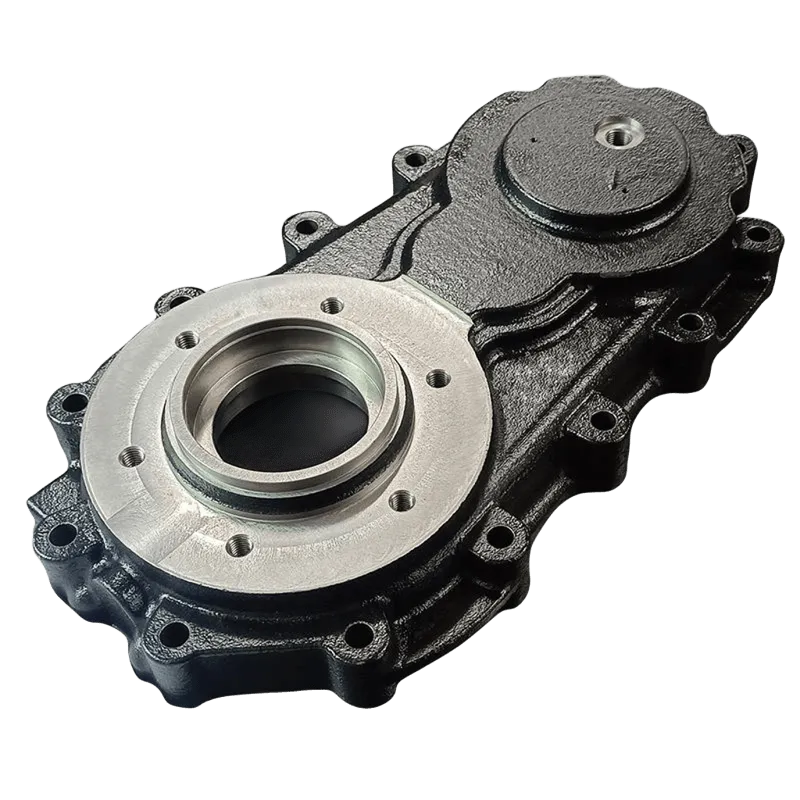
- automotive brackets, covers, housings
- gearboxes and motor housings
- industrial enclosures and structural components
- heat sinks and thermal parts
- parts that must feel “solid” without being heavy
Typical trade-offs:
- Porosity risk can be higher than many buyers expect, especially for thick sections, long flow lengths, or leak-tight requirements.
- Some alloy chemistries make anodizing appearance less predictable than wrought aluminum.
- Thin-wall, intricate details are possible, but zinc often makes them easier to achieve.
Why Aluminum Die Casting Is the Most Popular Choice
- Aluminum offers the best strength-to-weight ratio for mass production, giving sufficiently strong parts without zinc’s weight penalty.
- It scales across industries.
Automotive, marine hardware, industrial equipment, and electronics—aluminum meets a wide range of functional needs. - Thermal performance is a quiet superpower.
If your part dissipates heat (motor controllers, LED housings, power tools), aluminum is often the default. - Global availability reduces supply risk.
You’re less likely to be locked into a single region or a single alloy-niche source. - Total cost often wins when the part is structural.
Even if zinc tooling runs more smoothly, aluminum may reduce costs elsewhere—fewer ribs needed, fewer fasteners, lighter shipping, better product perception.
Procurement reality check: aluminum is popular, but it is not automatic. If your part is very thin-walled, highly detailed, and cosmetic, zinc can outcompete aluminum on yield and finish consistency.

Magnesium Die Castings
Magnesium die casting exists for one main reason: extreme weight reduction.
Why buyers choose magnesium:
- very low density (lighter than aluminum)
- good stiffness-to-weight
- used in handheld tools, aerospace-like weight-sensitive designs, and some automotive components
Where magnesium can be tricky:
- corrosion concerns depending on the environment and coating strategy
- stricter handling and process discipline (magnesium requires careful melting and safety controls)
- Not every supplier is truly set up for stable magnesium production.
If your project is “global procurement + lowest risk,” magnesium is usually a deliberate choice, not the default.
Zinc Die Casting Alloys
Zinc is the other core die casting material, especially for:
- small to medium parts
- tight tolerances
- fine features, threads, logos, sharp edges
- excellent surface finish and plating/painting results
Common zinc alloy families you’ll hear:
- Zamak alloys (e.g., Zamak 3, Zamak 5)
- ZA alloys (e.g., ZA-8) are needed for higher strength in some cases.
Where zinc die casting shines:
- hardware, fittings, latches, locks
- consumer product components with cosmetic requirements
- parts needing very consistent dimensions across large runs
- designs with thin walls and intricate geometry
Typical trade-offs:
- Zinc is heavier than aluminum (can be a deal-breaker)
- For high-temperature service or highly structural parts, zinc may not be ideal.
- Part size is often limited by economics and design practicality.
If the part is “small, detailed, pretty, and dimensionally picky,” zinc is often the cleanest path to stable production.
Other Die Casting Alloys
Beyond aluminum, zinc, and magnesium, you may see:
- Copper-based die casting alloys (more niche; can offer specific mechanical or wear properties, but often bring higher cost and process complexity)
- Tin/lead-based alloys historically existed but are generally constrained by modern compliance and safety expectations.
In most global industrial procurement, aluminum and zinc account for the majority of realistic die-casting sourcing decisions.
Die Casting Materials We Can Supply
For standard production and global procurement needs, we focus on aluminum and zinc die casting—the two materials with the broadest demand, supply stability, and predictable quality pathways.
In practice, that means we can support:
- aluminum die casting parts (cold-chamber) for structural/lightweight applications
- zinc die casting parts (often hot-chamber) for high-detail, high-finish components
If you already know your target market’s expectations (appearance class, corrosion environment, machining requirements, leak-tightness), material selection becomes much faster, and you avoid expensive redesign loops after tooling. Before you issue a Request for Quotation (RFQ), take action by listing your top three material risks. This proactive step not only streamlines your decision-making process but also positions you to mitigate potential issues early on, ensuring a smoother procurement experience. Rank your risks, shortlist alloys, and convene a supplier Design for Manufacturing (DFM) review this week. These decisive actions will transform this guidance into an immediate sourcing playbook, empowering your procurement strategy. A thorough DFM review should cover key areas, including verifying production feasibility, examining tolerances for manufacturability, assessing finishing options to meet appearance and corrosion requirements, and identifying potential risk points in both the design and production processes. Engaging with suppliers on these aspects leads to better alignment, minimizes production risks, and promotes a more efficient path to market-ready products.

FAQ
What is a common die material?
A common die material is H13 tool steel (or equivalent hot-work tool steel), as it can withstand repeated thermal cycling, high injection pressures, and wear while maintaining dimensional stability. For some applications, dies may use other tool steels or inserts (and surface treatments) depending on alloy, expected shot count, and the part’s abrasion/erosion demands.
Practical note: die life isn’t just “steel choice.” Gate design, cooling, alloy temperature, and cycle discipline often decide whether a die lasts 50k shots or 500k+.