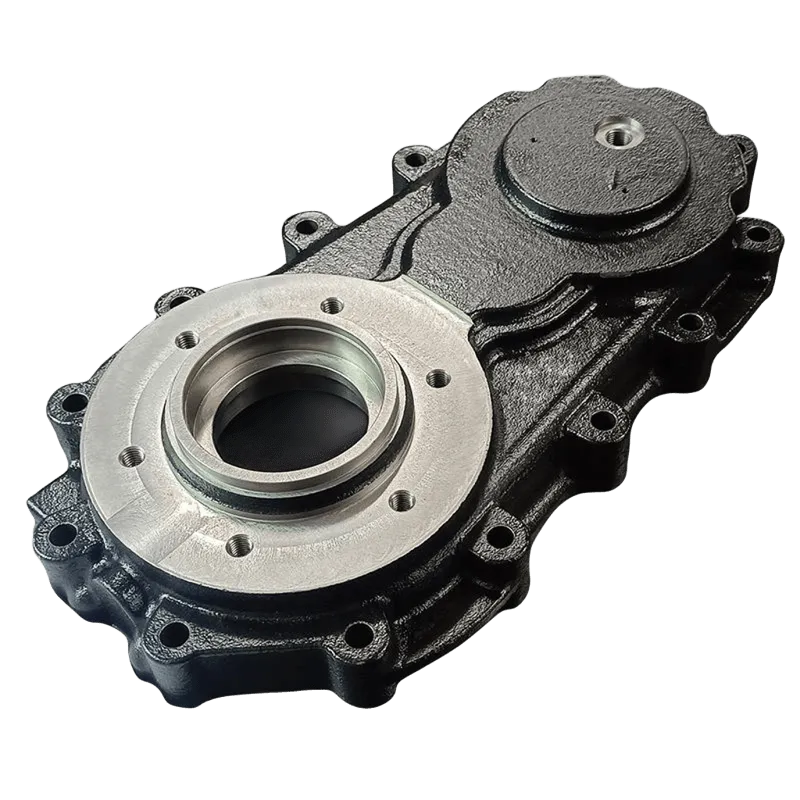



Die casting is a metal manufacturing process used to produce precise, repeatable metal parts by injecting molten metal into a steel mold (called a die) under high pressure.
It is widely used when parts require tight tolerances, smooth surfaces, and consistent dimensions at scale.
This guide explains what die casting is, how it works, where it is used, which materials are suitable, and what buyers should know before choosing this process. By the end, you will understand the die casting process and its applications, helping you make informed decisions for your manufacturing needs. Next, let’s look at the typical uses of die casting across different industries.
What Is Die Casting Used For?
Die casting is commonly chosen when parts must meet both functional and aesthetic requirements, especially in medium to high production volumes.
It is particularly effective when part geometry is complex, and consistency matters more than one-off flexibility.
Below are common industries where die casting is widely applied. Understanding these uses highlights why this technology is selected over other processes and sets the stage for a closer look at specific industry requirements.
Automotive Industry
Die casting is used for engine housings, transmission cases, brackets, and other structural components where dimensional accuracy and repeatability are critical.
Automotive buyers prefer die casting for its stable mass production and predictable per-unit costs once tooling is set.
Aerospace & Aviation
Die casting is applied to non-critical structural parts and housings that require lightweight aluminum or magnesium alloys.
Die casting is generally chosen for auxiliary automotive components due to certification requirements for load-critical parts.
To understand the benefits of die casting, compare it with other processes like machining and Metal Injection Molding (MIM). Die casting is usually more cost-effective for high-volume production than machining, which is labor-intensive and expensive for complex shapes. MIM is good for parts with fine details in small to medium volumes, but it often has higher material costs and longer cycle times.
Die casting excels at producing medium- to high-volume parts that require strength and durability, making it a preferred choice when those characteristics are crucial across many components.
In power and renewable energy, die-cast parts are used for enclosures, connectors, and structural components.
These parts need corrosion resistance and precise dimensions for safe field installation.
Electronics Industry
In electronics, die casting produces heat sinks, housings, frames, and structural parts.
The process enables thin walls and integrated features, reducing assembly steps and improving thermal performance.
Construction
Die casting is used for hardware components, fittings, and architectural parts where a consistent appearance is important.
It supports the production of standardized parts in large batches for building systems.
Industrial Equipment
Die casting produces covers, housings, brackets, and components for industrial machinery.
Here, buyers value structural integrity combined with production efficiency.
Medical Devices
For medical devices, die casting is used for selected housings and non-implant parts needing surface quality and repeatability.
Manufacturers must pay special attention to material selection and process cleanliness in this field.
Across these industries, the main need is consistent repeatability and controlled risk over experimental flexibility. To achieve these outcomes, it is crucial to understand the die-casting process.

Die Casting Process Overview
Die casting is a multi-step process, and each step has a direct impact on final part quality, cost, and delivery reliability.
Understanding these steps helps buyers identify where problems usually originate.
Mold Design and Manufacturing
The die is typically made from hardened steel and designed to withstand high pressure and repeated thermal cycles.
A well-designed die directly determines dimensional stability, surface quality, and long-term production efficiency.
This is one of the critical steps in the die-casting process. A high-quality mold can eliminate numerous issues in subsequent steps, such as surface defects, material waste, shrinkage, warping, and incomplete filling.
Checklist for Design-for-Manufacture:
– Verify component geometry for uniform wall thickness
– Assess draft angles to aid in clean ejection
– Plan for proper venting to minimize gas entrapment
– Evaluate fillets and radii for improved metal flow
– Align parting lines to optimize appearance and reduce flash
For buyers, tooling is an upfront investment and a long-term quality control mechanism.
Poor mold design almost always leads to higher defect rates later, regardless of how advanced the machine is.
Mold Preparation
Before casting, the die is cleaned, lubricated, and brought to a controlled temperature.
Improper mold preparation can cause sticking, uneven filling, and surface defects from the very first shots.
Metal Injection
Molten metal is injected into the die cavity under high pressure to fill thin sections and complex shapes. Buyers should request control metrics, such as the injection pressure curve and cavity fill time. This data helps avoid trapped gas and cold shuts by controlling injection speed, pressure, and timing. To ensure transparency, buyers should establish regular review meetings or request access to relevant production data. Doing so allows buyers to monitor key quality metrics, make decisions more quickly, and correct problems early in production.
Cooling and Solidification
The metal cools rapidly within the steel mold, forming a dense, dimensionally accurate part.
Uneven cooling can introduce internal stress, leading to warping or cracking after ejection.
Ejection
Once solidified, ejector pins push the casting out of the mold.
Poor ejection design can damage surfaces or deform thin-walled sections.
Trimming and Finishing
Excess material such as flash, runners, and gates is removed.
Depending on application requirements, additional machining, coating, or surface treatment may follow.

Types of Die Casting
Various die-casting methods exist to suit different materials and performance requirements.
Hot Chamber Die Casting
Hot chamber die casting is used for metals with low melting points, such as zinc and magnesium.
The injection system is immersed directly in molten metal, allowing faster cycle times and higher productivity.
This method is ideal for high-volume production of small to medium-sized parts with fine detail.
However, it is not suitable for aluminum due to corrosion and temperature limitations.
Cold Chamber Die Casting
Cold-chamber die casting is commonly used for aluminum- and copper-based alloys.
Molten metal is ladled into the chamber for each shot, which slows the process but makes it more versatile.
This method is widely used for structural aluminum components where strength and heat resistance matter.
It also places greater demands on process control and die design.
Common Die Casting Materials
Material selection is one of the most common decision points—and failure points—for buyers.
Choosing the wrong alloy can compromise strength, finish, or long-term durability.
Aluminum Die Casting Alloys
Common grades include 380, 390, 413, 443, and 518.
Aluminum alloys offer a strong balance between mechanical strength, weight reduction, corrosion resistance, and cost efficiency.
They are widely used for automotive, electronics, and industrial components.
However, aluminum requires careful control to minimize porosity.
Magnesium Die Casting Alloys
Typical grades include AZ91D and AM60.
Magnesium alloys are extremely lightweight, making them attractive for applications where weight reduction is critical.
They are more sensitive to processing conditions and require experienced handling.
Buyers should confirm supplier expertise before selecting magnesium.
Zinc Die Casting Alloys
Common zinc alloys include Zamak 2, Zamak 3, and Zamak 5.
Zinc provides excellent surface finish, tight tolerances, and thin-walled sections.
It is often used for decorative or precision components.
However, zinc parts are heavier than aluminum equivalents.
Other Die Casting Alloys
Copper-based alloys are used in specialized applications requiring high conductivity or wear resistance.
These alloys are less common due to higher tooling stress and material cost.

Advantages of Die Casting
For buyers, the real value of die casting is not just how parts are made, but how reliably those parts can be reproduced over time. When projects move from sampling to stable mass production, die casting shows its strongest advantages.
Complex Shapes with High Precision
Die casting allows highly complex geometries to be formed in a single operation, including thin walls, deep cavities, ribs, bosses, and integrated mounting features.
This capability reduces the need for welding, fasteners, or multi-part assemblies, thereby lowering assembly error rates and labor costs.
Because the metal is injected under high pressure, critical dimensions can be controlled with good repeatability once the process is stabilized.
For buyers, this means fewer dimensional surprises during assembly and less need for corrective machining later.
Excellent for Medium to High Volume Production
Die casting is especially cost-effective when production volumes justify the initial tooling investment.
After tooling costs are amortized, the per-part cost becomes highly predictable and scalable.
This makes die casting suitable for long-term programs in which part design remains stable.
For procurement teams, this predictability simplifies cost forecasting and supplier planning.
Consistent Quality Across Large Batches
One of the strongest advantages of die casting is consistency.
Once the die, material, and process parameters are validated, thousands of parts can be produced with minimal dimensional variation.
This consistency reduces downstream inspection workload and lowers the risk of batch-to-batch quality disputes.
It is particularly important for buyers supplying OEMs with strict incoming quality standards.
Reduced Secondary Processing
Die casting produces near-net-shape parts, which often require little or no additional machining.
Features such as holes, bosses, and mounting points can be integrated directly into the mold design.
This reduces machining time, tooling wear, and overall production lead time.
From a cost perspective, fewer secondary operations also mean fewer opportunities for error.
Smooth Surface Finish
Die-cast parts typically have smoother surfaces than those from sand casting or forging.
This makes them suitable for cosmetic applications or for direct coating, painting, or plating.
For products where appearance matters—such as enclosures or consumer-facing components—this can eliminate extra surface preparation steps.
It also improves coating adhesion and final product consistency.

Limitations and Trade-Offs
Despite its strengths, die casting is not a universal solution.
Understanding its limitations is critical to avoiding costly mistakes during product development and sourcing.
High Initial Tooling Cost
Steel dies are expensive to design and manufacture, especially for complex parts with multiple slides or cores.
This upfront investment only makes sense when production volume and product lifecycle justify it.
For low-volume or frequently changing designs, die casting may lock buyers into high sunk costs.
This is why design finalization before tooling is essential.
Risk of Porosity
Because molten metal is injected at high speed, gas entrapment can occur if venting, gating, or process parameters are not properly designed.
Internal porosity may not be visible on the surface but can weaken structural integrity or cause leakage in pressure-bearing parts.
For applications requiring airtight or pressure-tight components, additional validation or alternative processes may be needed.
To foster effective collaboration with suppliers, buyers should establish shared metrics for porosity control. Sample metrics could include the maximum allowable porosity percentage or the size and distribution of pores within cast parts. Engaging in a joint effort to define acceptable porosity specifications not only aligns expectations but also mitigates potential blame. Documenting these agreements can be done through a quality agreement document, which specifies roles, responsibilities, and technical criteria. This collaborative approach helps ensure a mutual understanding and accountability in quality control.
Wall Thickness and Geometry Constraints
Die casting performs best with relatively uniform wall thickness.
Thick sections, sharp transitions, or uneven geometry increase the risk of shrinkage, internal stress, and deformation.
These limitations require design optimization instead of copying designs from other methods. To address these constraints, use design heuristics. For example, keep the wall thickness-to-width ratio at 3:1 or less to ensure uniform cooling and reduce defects. Following these guidelines speeds up early design checks and lays a better foundation for successful die-casting projects.
Ignoring these constraints often leads to recurring quality problems during mass production.
Parting Line and Cosmetic Limitations
All die-cast parts have parting lines, which may affect appearance depending on placement.
Poorly planned parting lines can increase flash, require additional finishing, or impact cosmetic quality.
For visible components, the parting line location must be discussed early in the design stage.
This is a common oversight when buyers focus only on cost and neglect visual requirements.
Limited Flexibility After Tooling
Once a die is built, design changes are costly and sometimes impossible without remaking the tool.
This makes die casting less flexible than machining or fabrication for late-stage design modifications.
Buyers should treat tooling approval as a final commitment rather than a trial step.
Clear drawings, tolerance definitions, and application requirements are essential before moving forward.

Key Die Casting Design Considerations
Parting Line
Affects mold complexity, flash control, and final appearance.
Wall Thickness
Uniform walls reduce shrinkage and internal stress.
Draft Angle
Allows clean ejection and reduces die wear.
Fillets and Radii
Smooth transitions improve metal flow and reduce stress concentration.
Ribs
Add strength without increasing wall thickness.
Good design reduces defects before production even starts.
What Buyers Should Confirm Before Ordering Die-Cast Parts
Before requesting a quotation, buyers should be ready to confirm the following details:
- Application environment (load, temperature, corrosion)
- Target annual volume: Critical dimensions and tolerances
- Surface finish requirements: Secondary operations needed
- Testing or certification requirements
Buyers should request supplier process documentation or sample inspection reports. These documents help reduce unexpected issues and improve supplier reliability by showing quality management and production capabilities. Clear information and documentation reduce quotation errors and production delays.
FAQ
What is die casting cookware?
Die-cast cookware refers to cookware made by die casting, in which molten aluminum is injected into molds to form pots, pans, or lids.
From a safety perspective, properly manufactured die-cast aluminum cookware is generally safe when:
- Food-grade aluminum alloys are used.
- Surfaces are coated (non-stick, ceramic, or anodized)
- Manufacturing follows regulated quality standards.
Concerns usually arise not from the die casting process itself, but from poor material selection or low-quality coatings. High-quality cookware manufacturers carefully control alloy purity and surface treatment.