


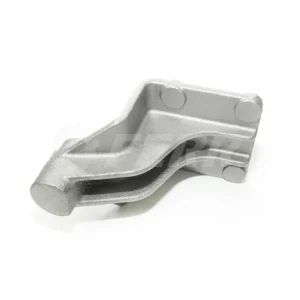

Carbon Steel Suspension Brackets
Enquire Now*Provide your application requirements—such as stress conditions, materials, size range, and even product name. We are always available for customization, so please contact us directly.
Specifications
Name Carbon Steel Suspension Brackets Material Carbon Steel /customzied Application auto parts/ truck parts/ construction machinery parts /agricultural vehicle parts/ mechanical equipment parts/ machine tools /hardware and so on Process Casting +Machining(if Need)+surface Treatment Machining Process Machining Center Heat treatment Tempering/Customized Manufacturing Process Precision casting, sand casting, and other custom processes Service Customized OEM Surface treatment Customers’ Demand Cast carbon steel has properties like high tensile strength, toughness, and wear resistance, which can be fine-tuned through alloy composition and heat treatment. It is also known for good machinability and weldability, though its resistance to corrosion is poor unless alloyed with elements like chromium and nickel. The specific properties of a cast carbon steel part depend heavily on its carbon content and subsequent heat treatments, allowing for a wide range of performance characteristics.
Key properties of cast carbon steel
- Strength: High tensile and impact strength, with strength increasing with higher carbon content.
- Ductility: Lower carbon content provides greater ductility (ability to deform under stress), which is essential for applications requiring flexibility.
- Toughness: Resistance to fracture is excellent and can be adjusted through heat treatment and alloying to absorb energy.
- Wear and corrosion resistance: Wear resistance can be enhanced with alloying elements like chromium and molybdenum. Corrosion resistance is poor, but can be significantly improved with additions of chromium and nickel to create stainless steel.
- Heat treatability: Can be heat-treated to achieve specific combinations of strength, hardness, and durability. Low-carbon steel can be surface-hardened via carburizing.
- Machinability and weldability: Generally good, depending on the specific composition and hardness. However, higher carbon content can make it more difficult to machine and weld.
Factors affecting properties - Carbon content: Higher carbon levels increase hardness and strength but decrease toughness, ductility, and weldability.
- Other alloying elements: Elements like manganese, silicon, chromium, and molybdenum can be added to improve specific properties such as tensile strength, wear resistance, and hardenability.
- Heat treatment: Can be used to modify the mechanical properties, enhancing strength, hardness, and toughness.
Related Products


Let’s talk about your next project !
I don't have complete drawings, can I send inquiry?
Yes, we can help you analyze based on your description, samples and photos.
I am not sure if you can do my parts?
Most of our customers come to us because “others say they can’t do it”.
Are you a factory or a trader?
We are a factory and have a project management team that can handle the technology, cost and delivery at the same time.
 Upload Your FilesGet a Quote Now
STEP STP SLDPRT IPT PRT SAT IGES IGS CATPART X_T OBJ STL files