

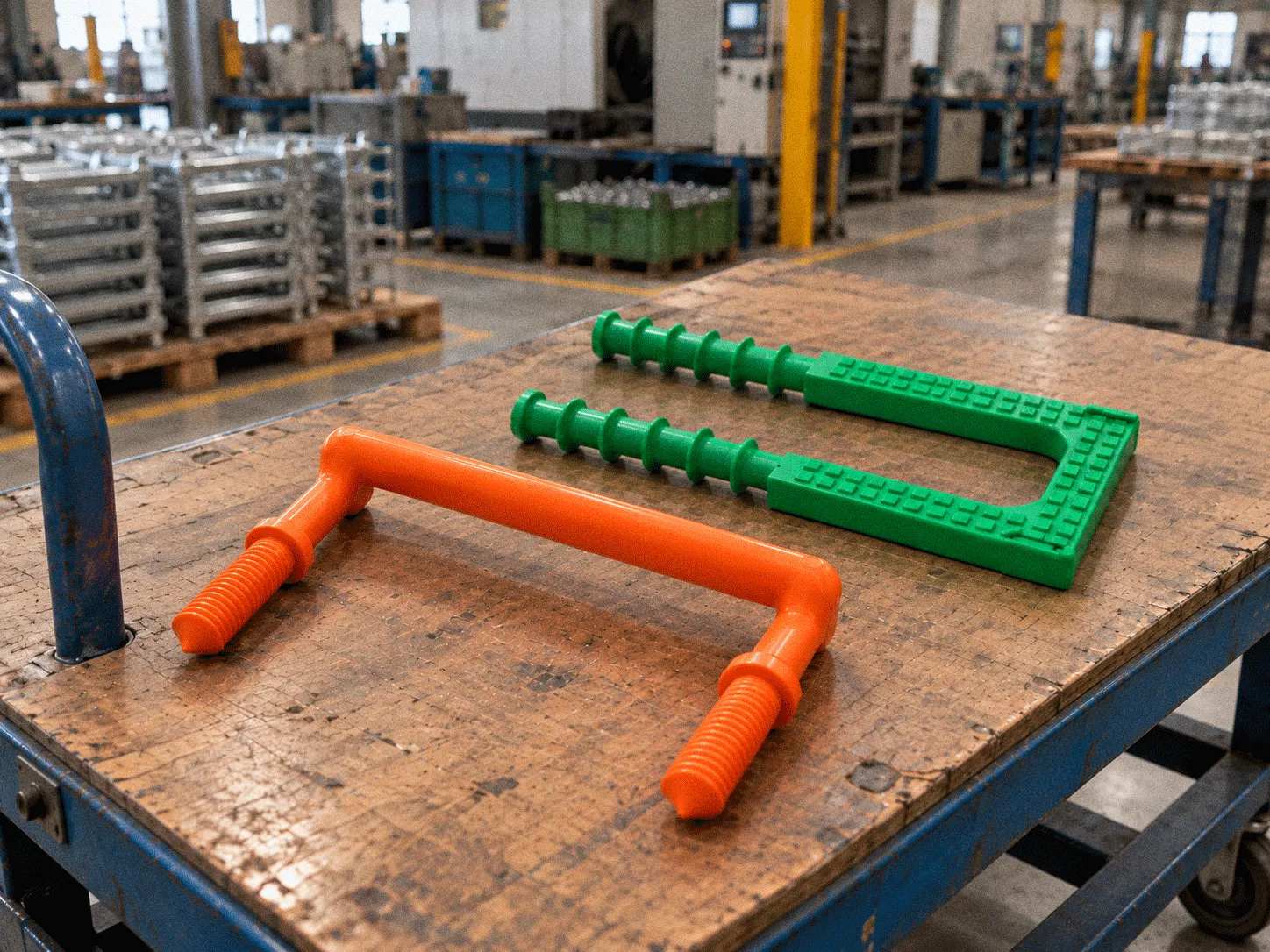
You have three quotes for the same manhole step. All three suppliers say they’re the manufacturer. The prices don’t line up, the lead times don’t line up, and one of them wants twice the MOQ of the others.
So who’s actually making the part?
We’re a foundry, so you might expect us to tell you to always buy from a factory. We won’t. Buying direct doesn’t automatically get you a better price or a better step, and a well-run trader can beat a disorganized factory on both. What really matters is who makes the step, who inspects it, and who pays when a batch arrives wrong.
The label is just a shortcut for those questions. Below is how to check them directly before a bulk order goes out: production role, process control, quality evidence, custom work and total cost.
What Is the Difference Between a Manhole Step Manufacturer and a Trader?
On paper it’s simple. A manufacturer makes the product. A trader buys it from someone who does and sells it on.
In practice the line blurs. Plenty of factories subcontract a process or two. Plenty of trading companies work with one or two plants they know inside out. That’s why the label on the website tells you very little.
What a manufacturer typically controls
- Its own equipment and processes (bending, injection molding, casting or galvanizing, depending on the step type)
- Raw material purchasing and the production schedule
- Dimensional checks, in-process control and batch traceability
- Tooling, samples and the engineering behind OEM work
“Typically” is doing a lot of work in that list. Ask for proof of each item.
What a trader or sourcing company typically provides
- Products from several factories in one order
- One contact instead of five, with the trader coordinating the suppliers
- Export paperwork, communication and logistics
- Sometimes lower MOQs or a wider product range
That’s real value. If you need steps, covers and frames in the same container, a good trader can save you weeks.
Why the business model matters less than actual responsibility
Set the label aside and ask three questions. Who physically makes the step? Who inspects it before it ships? Who’s on the hook if it fails in the field?
If those answers aren’t in writing, “factory direct” doesn’t protect you.
One check people often skip: which company name is on the contract, the proforma invoice and the bank account? That’s the company you can actually claim against. If it isn’t the one whose factory you toured, ask why.
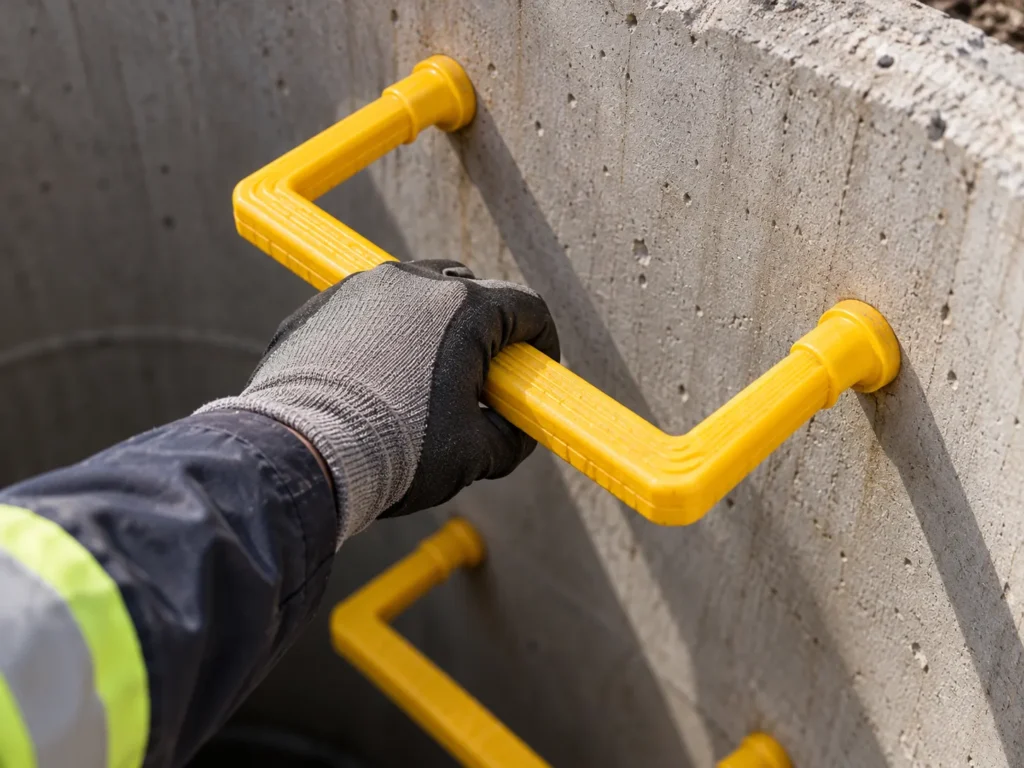
Verify Who Actually Manufactures the Manhole Steps
A website can say anything. A plant address, a process breakdown and a live camera are much harder to fake, so start there.
Ask for the manufacturing address and process details
Ask for the plant address, not the sales office. Then ask which production steps happen in-house and which are subcontracted. Distributors can use this manhole step supplier audit checklist to verify the broader supply chain.
A real factory can answer that in one email. If all you get is “we work with partner factories” and no names or locations, keep asking.
Request evidence of production capability
Match the evidence to the product:
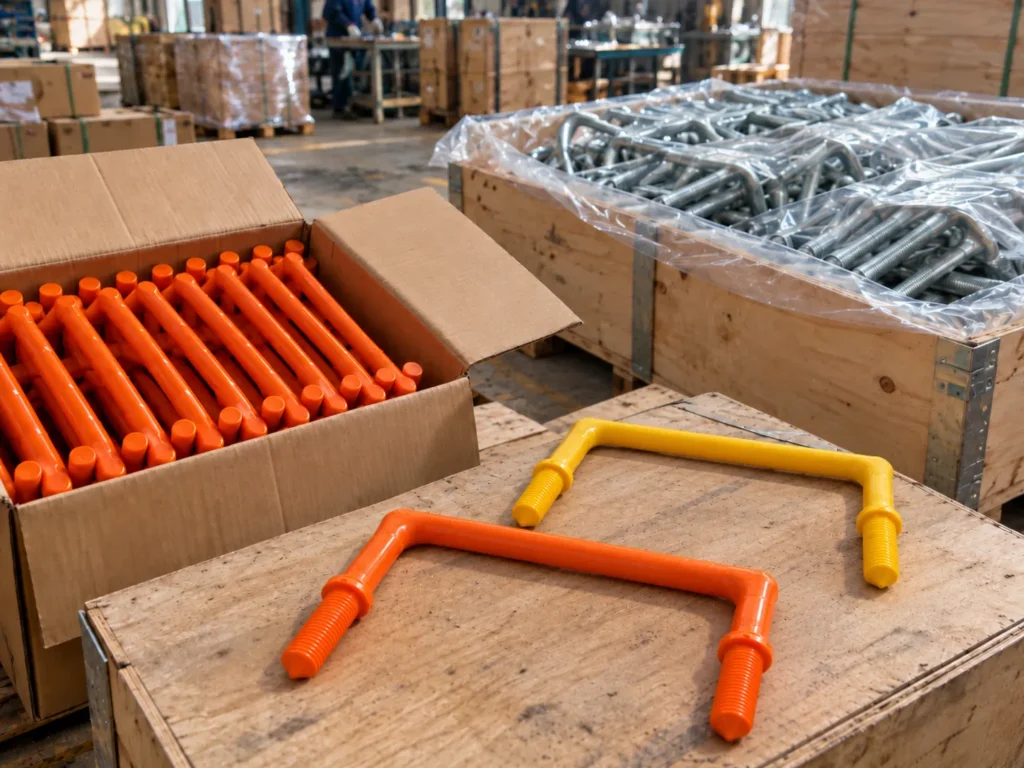
- PP-encapsulated steps: steel core cutting and bending, then injection molding of the polypropylene coat
- Cast iron steps: patterns, melting, pouring and finishing
- Galvanized steel steps: forming, plus whoever does the hot-dip galvanizing (often a specialist subcontractor)
Subcontracting isn’t a red flag by itself. Plenty of good factories send galvanizing out. What matters is whether the supplier inspects what comes back, and whether it’s willing to tell you who does the work.
The best evidence is a live video call. Ask them to point the camera at the bending line or the molding machine while it’s running your type of step. Keep in mind that a trader can walk you around a partner’s plant too, so cross-check. Does the signage match the address you were given? Can they show your drawing on the shop floor, not just a tidy showroom? A third-party factory audit in the supplier’s own name settles most of it.
Check whether the supplier can explain the process
Ask them to walk you from raw material to finished step. Where are the quality checkpoints? What happens when a batch comes off the line with the leg spacing out of tolerance?
People who run a production floor answer with specifics. People reading from someone else’s catalog tend to go vague.
Compare Product Specifications and Customization Capabilities
Every supplier says “we can customize.” Test it.
Confirm materials, dimensions, and coating requirements
Send every supplier the same spec, in writing (skip the lines that don’t apply to your step type):
- Steel core grade and diameter
- PP encapsulation material, color and thickness
- Step width and wall projection
- Bend geometry and tread profile
- Anchoring-end design and embedment length
- Hole spacing for precast installation
- Surface treatment: galvanized, polymer-coated, or both
If a supplier sends a price without asking about half of these, that tells you something.For hidden core and coating details, read what is inside a polypropylene-coated manhole step.
Ask who reviews drawings and approves samples
Send a drawing and see what comes back. A supplier with real engineering behind it usually replies with questions: the tolerance on leg spacing, whether the anchoring end has to fit a particular precast mold, which load test you need.
Then ask how samples get approved and what has to happen before mass production starts. First-article approval before batch release should be standard practice, not a favor. To check sample-release controls in detail, see how to qualify a manhole step sample.
Verify tooling ownership and change control
For custom steps, settle these before you pay any tooling fee:
- What does the mold cost, and who owns it?
- Can you take it with you if you change suppliers?
- How are drawing revisions tracked so your fifth batch still matches the approved sample?
For reference, our custom manhole steps page lists what we adjust on OEM orders, from width and projection to anchoring geometry and marking. Whoever you buy from, expect that level of detail in writing.
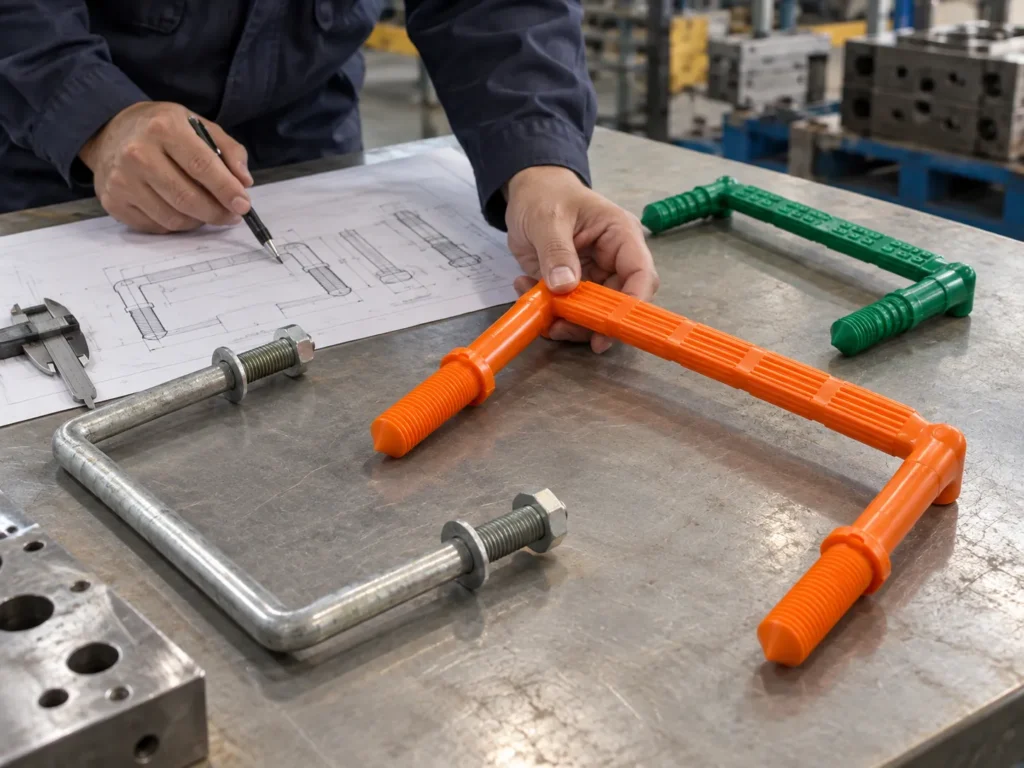
Evaluate Quality Control and Batch Traceability
This is where most sourcing problems start, and it’s where the factory-or-trader label tells you the least.
Ask for product-specific test reports
A test report only counts if it covers the step you’re buying. Check:
- Model or drawing number
- Material
- Test method and the standard it refers to (EN 13101 in Europe, ASTM C478 for US precast manholes, or whatever your project spec names)
- Test date and who carried it out
- Results, and what the report says it applies to
A load test on a different step design tells you nothing about yours, however recent it is.
Understand in-process and final inspection
Ask the supplier to describe, in order: incoming material checks, first-article inspection, in-process checks, final sampling, and what happens to rejected parts.
If the only inspection happens at the end, defects get caught late. Sometimes they don’t get caught at all.
Verify batch records and corrective actions
Pick a past batch and ask to see its inspection record. Can they link it to a material lot and a production date?
Then ask what they did the last time a batch failed. “That never happens” isn’t a good answer. Either they’re new to this or they’re not being straight with you.
With a trader, ask one more thing: does it have its own inspectors at the factory, or does it rely on the factory’s records? Both can work. You just need to know which one you’re paying for.
Whoever you buy from, you can add your own safety net: a third-party pre-shipment inspection against the approved sample, booked before you release the balance payment. It costs far less than a container of rejects.
Distinguish a factory audit from a certificate
ISO 9001 shows a company runs a quality management system. It doesn’t show that a specific step model meets a specific product standard.
Treat certificates as supporting evidence. Test reports, inspection records and batch traceability are the proof. And check whose name is on the certificate: if a trader sends you a factory’s ISO certificate, it tells you about the factory, not the trader.
Compare MOQ, Lead Times, Pricing, and Total Purchase Cost
A lower unit price only means something if the quotes cover the same thing. Line them up first, then look at capacity and the costs that never show on the quote.
Understand what is included in each quote
Before you compare prices, make sure every quote covers the same thing: same spec, same quantity, same packaging, same Incoterms.
Then check whether tooling, samples and testing are in the price or billed separately. A quote that looks cheap often leaves one of them out. Our guide to Bulk Manhole Steps: How to Compare Quotes Fairly goes through this line by line.
Check capacity against your delivery schedule
Ask for monthly capacity on your specific item, how full the schedule is right now, and whether they can ship in batches. Then ask what happens if your order doubles halfway through the project.
A trader may have more room here because it can pull from more than one plant. The trade-off is batch consistency, so watch that closely.
Calculate the total cost of working with each supplier
Unit price is one line on the bill. Add tooling and samples, freight, third-party inspection, the cost of replacing a bad batch, and the hours your team spends chasing answers.
A supplier that’s a little cheaper but needs three rounds of samples often ends up being the expensive one.
Assess Communication, Technical Support, and Accountability
Price wins the first order. How a supplier handles questions, changes and defects decides whether there’s a second one.
Identify who handles technical questions
When you ask about a tolerance or a material change, who answers? An engineer, or a salesperson who forwards your email and replies three days later?
Either can be fine. Just find out before your project schedule depends on it.
Clarify responsibility for defects and replacements
Put the defect process in the contract. How soon do you have to report a problem? What evidence do they need? Is the fix a replacement, rework, a credit or a refund? And who pays the freight on replacements?
With a trader, confirm whether it stands behind the product itself or just passes your claim back to the factory.
Check whether communication scales with repeat orders
The first order gets everyone’s attention. By the fifth, you find out whether the supplier has a system or just a keen salesperson.
Ask how they control drawing revisions, how order changes get confirmed, and how you’ll hear about delays: from them, or only when you chase.
Use a Supplier Verification Checklist Before Placing a Bulk Order
What evidence should buyers request?
Use this table for every supplier on your shortlist, factory or trader. If a row stays empty, you know where to dig.
| What to check | Evidence to ask for |
| Supplier identity | Registered company details and a real business address |
| Manufacturing role | Plant address, process flow, and which steps are subcontracted |
| Product capability | Spec sheet, drawing review, and how custom work is handled |
| Quality control | Test reports for your model, inspection process, batch records |
| Order capacity | MOQ, monthly capacity, and a lead-time plan for your quantity |
| Commercial terms | Itemized quote, payment terms, Incoterms |
| Accountability | Written terms for defects, replacements and claims |
Red flags to investigate
- They can’t or won’t give you the plant address.
- The test report covers a different model from the one they quoted.
- Their story about materials, tooling or subcontracted work changes from one email to the next.
- They avoid putting quality responsibility in writing.
- They promise to meet every standard before they’ve even looked at your spec.
None of these automatically rules a supplier out. They’re reasons to ask more questions before any money moves.
Getting the buyer side right matters too. Our Manhole Steps RFQ Checklist: 12 Details Buyers Should Provide covers the drawings, materials and quantities suppliers need from you to quote accurately.
When Should You Choose a Manufacturer or a Trader?
Neither model is better by default. It comes down to what you’re buying, how much of it, and how often.
When direct manufacturer cooperation may be more suitable
- Long-term or repeat bulk orders
- OEM steps built to your own drawing
- Projects that need tooling work and close technical back-and-forth
- When you want visibility into production, or to coordinate the schedule directly
When a trader may offer more value
- Mixed orders across several product lines
- Volumes below a factory’s MOQ
- You’d rather manage one supplier than five
- Local stock or regional service matters more than unit price
Make the decision based on evidence and total value
Weigh technical fit, who carries quality responsibility, total cost, delivery reliability, and how long you plan to keep buying.
“Factory direct” is a claim. The documents behind it are what you’re actually buying. Verify the evidence, not the label.
Request a Bulk Manhole Step Quotation from FERR
If you’re sourcing custom steps in volume, send us your drawing or a sample, the material and coating you need, your estimated quantity, and any project requirements.
We’ll review the spec, flag anything that needs clarifying, and talk through manufacturing and pricing options. Ask us the same questions this article suggests, including which processes we handle in-house. You’ll get straight answers.
Request a Bulk Manhole Step Quotation
Preguntas frecuentes
How can buyers verify whether a manhole step supplier is a manufacturer or trader?
Ask for the plant address, then check it. A live video walk-through of the production line is the quickest test. Then make sure the company on your contract and invoice is the one that owns that plant. A third-party audit in that company’s name settles most doubts. Also ask which processes are done in-house. Vague answers don’t prove someone is a trader, but they’re a reason to keep asking.
Is buying manhole steps directly from a factory always cheaper?
No. Factories often set higher MOQs, and unit price is only part of the cost. A trader buying in volume from an efficient plant can match or beat a factory’s price, especially on mixed or smaller orders. Compare like-for-like quotes, then add tooling, freight, inspection and rework risk before you decide.
What documents should a manhole step manufacturer provide?
At minimum: company registration, the factory address, a process description that names any subcontracted steps, drawings or spec sheets, test reports for the exact model, inspection records and an itemized quote. For custom steps, add sample approval records and written tooling terms. ISO 9001 helps, but it doesn’t replace product-level evidence.
Can a trader provide reliable quality control for custom manhole steps?
Yes, if it has a real process behind it. Ask whether the trader has its own inspectors at the factory, keeps batch records and controls drawing revisions. Check whether it handles quality claims itself or passes them to the factory. A trader with a long relationship with one plant can manage custom work well. One that switches factories every order usually can’t.
What should importers verify before placing a bulk manhole step order?
Confirm who makes the step and where, that test reports match your exact model, and that samples were approved against your drawing. Get capacity and lead time for your quantity, an itemized quote, and written terms for defects and replacements. If anything on that list is unclear, sort it out before you pay the deposit.