

Key Takeaways
- Break total die-casting cost into tooling, material, labor, machine time, and overhead to build accurate budgets. Map each process step from die design to post-processing so you know where money is spent and where there is room for savings.
- Measure the impact of volume and complexity on unit price and total spend. Use break-even analysis to determine when high-pressure die casting amortizes higher tooling with lower per part cost at scale.
- Consider tooling as a long term asset and amortize durability, maintenance, and cavity count against projected volume. Contrast techniques and raw stock to prove project feasibility prior to committing investment.
- Choose alloys by cost-in-use, not by price per kilogram. Consider raw material efficiency, scrap salvage, machinability, and surface finish objectives to minimize process time and rework.
- Track hidden cost drivers such as energy volatility, maintenance downtime, compliance, and scrap rate. Use preventive maintenance, energy-efficient equipment, and aggressive quality control to fix costs and protect margins.
- Avoid die-casting cost pitfalls with DFM, simulation-driven die design, optimizing material use, and automating secondary processes. With die-casting cost, build a full cost-of-ownership model to include logistics, QA, and lifecycle management to price competitively and profitably.
Die-casting cost is the sum of tooling, material, labor, machine time, scrap, and quality control expenditures for making metal parts by high-pressure casting. Costs vary with alloy selection (aluminum, zinc, magnesium), part geometry, shot size, number of cavities, cycle time, and tolerance class. Tool steel grade, gate design, thermal control, and coating shift the budget. For procurement and engineering teams, transparent cost drivers allow precise RFQs, reasonable vendor verifications, and robust TCO projections for worldwide programs.
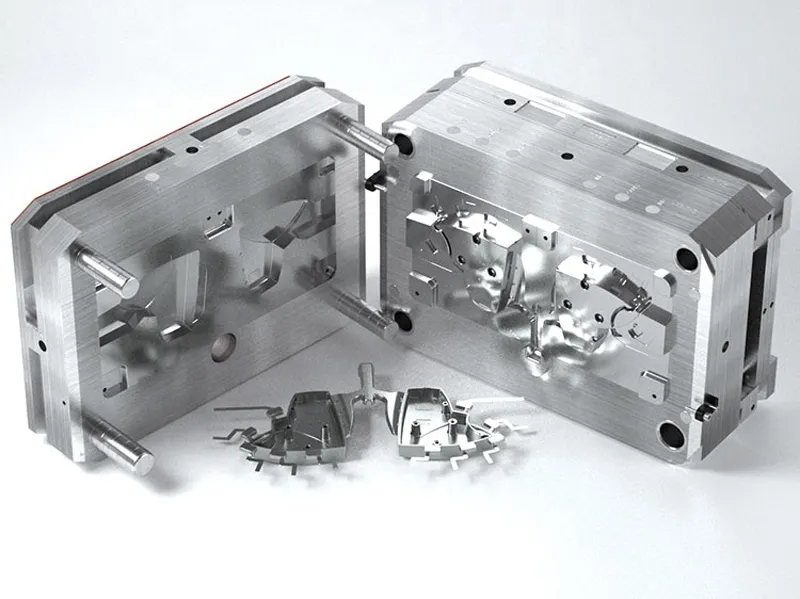
Deconstructing Die-Casting Cost
Die casting cost encompasses various factors such as tooling, material, labor, machine time, energy, and overhead. Each stage of the manufacturing process, including tool design, melt prep, and injection, contributes to overall costs and risks. Conducting an upfront cost analysis is crucial to avoid underquoted parts and budget overruns.
- Production volume and complexity drivers: * Higher volume spreads tooling over more units, so unit cost drops.
- Complex parts increase cycles, scrap, and secondary operations, which escalates cost.
- Multi-cavity dies assist at volume but require increased clamp force.
- Stable demand warrants hardened tooling, while intermittent demand does not.
1. Tooling Investment
Initial tooling encompasses critical aspects such as die design, 3D modeling, and thermal simulation, all of which are vital in the die casting process. The setup often includes steel blocks (H13/1.2344) EDM, CNC machining, and hot-runner or runner design, along with ejectors and first-article setup fees. A recap of die casting costs indicates that large aluminum die sets typically range from 80K to 250K, while zinc dies are more economical due to their smaller tonnage. The viability of these costs hinges on the number of parts produced and the required takt time.
Tool life and maintenance significantly impact long-term operational costs. Factors like steel grade, surface treatment (nitriding, PVD), and cooling layout enhance the efficiency of the manufacturing process, reducing issues like soldering and heat checking, which in turn cuts downtime and scrap rates. Scheduled refresh cycles prove to be more cost-effective than reactive fixes.
2. Material Selection
Material cost is alloy per kilogram, yield rate includes gating, runners, and overflow, and scrap recovery. Low yield gating and out of cell remelt reduce utilization. Select alloys that satisfy strength, corrosion, and thermal requirements without driving up expensive heat treatment.
Alloy selection moves process expense. Aluminum requires more energy and longer fill. Zinc fills quickly at low temperature. Magnesium lowers mass but requires protective melt handling. Surface finish is better with zinc. Aluminum usually requires shot blast or machining on sealing faces.
3. Production Volume
Scale appears in amortized tooling, longer runs per setup, and higher machine utilization. The break-even with sand or machining is when the total of tooling plus unit falls below alternatives. Many programs break even around 10,000 to 50,000 parts, but geometry and finish push the line.
Tune batch sizes to minimize changeovers. The moderate volume buys single- or dual-cavity; mass production makes multi-cavity and automation possible, bringing cost per piece way down.
4. Part Complexity
Tight tolerances, deep ribs, thin walls, and undercuts increase cost by requiring longer fill and cool times, more complex slides, and additional EDM. Post cast drilling, milling, or tapping increases cycle time.
Advanced die features (conformal cooling, vacuum assist) decrease porosity and shrink scrap but raise upfront tooling. If press tonnage and thermal balance permit, more cavities lower unit price. Design for die repeatability — target cast-to-print features and datum schemes.
5. Post-Processing
Secondary operations—deburr, shot blast, impregnate, anodize or powder coat, chromate or paint—introduce direct cost and queue time. Machining of sealing faces, threads, or critical bores must be designed around casting datum to maintain Cp/Cpk.
Surface category determines cycle time. Class A finishes slow lines and raise rework. Capture these steps in the costed BOM and schedule to avoid last minute surprises.

The Hidden Cost Drivers
When discussing cost analysis, a straightforward piece-price view does not fully capture the die casting process costs. This encompasses various factors such as operational spend, risk, and lifecycle effects. Key considerations include energy intensity and rate volatility, scrap and rework, porosity-driven leaks and rejects, and tool design flaws. Additionally, preventive maintenance versus breakdowns, certification and testing, and logistics play a crucial role in the overall manufacturing process efficiency.
Energy Volatility
Energy is a major line item and a genuine emissions driver. Hot-chamber and cold-chamber presses pull peak loads for melting, shot end, and holding, so rate swings can shift unit cost by a few percent. Record energy as a percentage of COGS, not kWh/shot. A simple benchmark is kilowatt-hours per kilogram cast, checked weekly.
Get some energy-efficient ovens, servo pumps, variable-frequency drives, and optimized thermal management. Flexible shot end systems can minimize fill time yet prevent overpacking, slice kilowatt peaks and scrap. About: The hidden cost drivers add sub-metering per cell to expose idle draw, heat loss and leak air.
Maintenance Downtime
Unplanned stops during the die casting process can lead to significant losses, costing more than just the parts themselves. To accurately compute the cost of lost output per hour, factor in model mix and compare it with planned stops. Tooling rebuilds, lube, sensors, and hydraulic service should be included in your operating budget from the beginning. By selecting durable steel, implementing proper heat treatment, and ensuring robust cooling lines, manufacturers can reduce crack and washout, ultimately improving the production process and minimizing porosity issues.
The Secret About: The Cost Drivers
To optimize operational efficiency, schedule preventive maintenance related to cycles and thermal shocks rather than relying solely on the calendar. A well-maintained parts department with a local stock of wear items helps minimize mean time to repair. Poor mold design can inflate maintenance costs, as thin ribs, long flow lengths, and inadequate vents lead to soldering and galling, which ultimately increases downtime and the need for rework.
Regulatory Compliance
Compliance is not overhead; it’s risk control. Factor in environmental, safety, and quality requirements, including ISO, ASME, or API audit costs, emissions abatement, waste handling, pressure testing, and material traceability. Include documentation and testing fees in the quote, such as X-ray, leak testing, and tensile coupons for critical components.
Standards change. Schedule process changes for new limits on emissions or materials. Price the risk of non-compliance. Scrap quarantines, fines, and customer chargebacks can erase margin quickly.
Scrap Rate Impact
Scrap lurks in countless little amounts that accumulate. Track scrap rate by cavity and defect code. Porosity, cold shuts and misruns drive rework, impregnation or rejects that increase material and energy per good piece.
Leverage real-time data to identify drift in fill time, metal temperature, and die lube. Root-cause with gate balance, venting, vacuum level and shot profile. Tunable shot end often eliminates porosity. Design choices matter: alloy, wall thickness, and finish class change yield and machining stock. Reusable, returnable dunnage minimizes handling damage and keeps scrap from logistics outliers.

Strategic Cost Reduction
Strategic cost reduction in the die casting process means minimizing spend without compromising function, safety, or compliance. It’s essential to mind the total cost of ownership, not just the unit price, employing process-based cost modeling to link cycle time, shot mass, scrap rate, and tool life directly to overall cost. Pressure die casting propels molten metal into a steel die at high velocity, making it effective for producing intricate designs at volume. Apply value analysis/value engineering to eliminate non-value features and ensure efficient production, while avoiding unproven suppliers or last-minute approvals.
-
Map cost drivers: die design, cavity count, shot weight, cycle time, scrap, energy, alloy price, secondary operations, and maintenance.
-
Apply VA/VE and substitution: Thinner ribs made from higher specific-strength alloys can reduce mass while keeping function intact.
-
Apply process-based cost models and mass-scaling tools when assemblies include motors or batteries.
-
Engineer for break-even: small low-volume parts often need approximately 40 percent mass cut. Big high-volume components can break even at approximately 10 percent.
-
Validate with simulation to reduce trials.
-
Automate stable secondary steps.
-
Plan lifecycle: preventive maintenance beats reactive repair.
-
Locate certified components and local support to reduce lead time and integration risks.
Design for Manufacturability
- Maintain consistent wall thickness, which is commonly 2 to 4 mm for aluminum. Add fillets and avoid sharp corners.
- Draft angles ≥1° for easy ejection, reduce die wear.
- Ribs and bosses control flow, venting, and shrink.
- Minimize undercuts; use slides only when cost‑justified.
- Consolidate parts to cut joints and leak paths.
- Standardize hole sizes, threads, and datum schemes across families. Early design involvement establishes tooling, cycle time, and scrap risk. Late changes create rework.
Leverage Process Simulation
Run 3D CAD with filling and solidification analysis to highlight air entrapment, cold shuts, and soldering. Tune gates, runners, and vents for optimum metal flow. Then evaluate porosity and warpage prior to steel cutting.
Test gating alloys, shot speeds and thermal balance in virtual trials to choose the least-cost stable window. This cuts down setup time and first-article scrap and restricts tool rework.
Consider super vacuum die casting if your porosity targets are tight. Capital expenditures, cycle time, and yield impacts have to be modeled carefully as the strategic implications are still under study.
Optimize Material Use
Optimize utilization rate with multi-cavity layout, tight trim allowances, and recycle runners. Closed-loop re-melt offsets alloy spend.
Right-size thickness for loads and pressure sealing. Swap to higher specific properties when it permits thinner sections without strength loss.
Redesign ribs, lattice cores, and coring to reduce guard sealing surfaces and threads.
Check economics by volume: small low-volume parts need deeper mass cuts to break even than large high-volume parts.
Automate Secondary Operations
Strategic cost reduction in the manufacturing process can be achieved by automating tasks like deburring, deflashing, trimming, and shot-blasting to stabilize cycle times and reduce labor costs. Introducing robots for consistent bead blasting and glue prep enhances efficiency. Additionally, applying cost optimization strategies, such as tying vision checks to detect porosity, can further streamline operations and minimize overall costs.

Process Choice and Cost
The die casting process significantly affects the overall cost of ownership, which includes factors like yield, scrap, and uptime. When selecting a manufacturing method, it’s crucial to consider the pressure die casting method along with certified materials and compliant tooling steels. Avoid cutting material specs or skipping compatibility checks, as these can lead to increased processing costs and complicate the production process.
Cost Comparison by Process
|
Process |
Typical Volumes |
Tooling Cost |
Per-Part Cost at Scale |
Surface Finish/Tolerance |
Yield & Porosity |
Energy/Equipment |
|---|---|---|---|---|---|---|
|
High-Pressure (HPDC) |
High |
High |
Low |
Excellent |
Lower porosity with optimized gating; risk of gas entrapment |
High |
|
Low-Pressure (LPDC) |
Medium |
Medium |
Medium |
Good |
Reduced porosity, better integrity |
Medium |
|
Gravity (GDC) |
Low–Medium |
Low |
High at large runs |
Fair |
Moderate porosity; thick sections favored |
Low |
For aluminum, a simple baseline cost per 1 kg part can be approximated as material plus machine plus labor, which equals 5.38 USD. Here, machine costs from the die casting process equal 0.027 USD per unit, while labor accounts for 1.5% of blank cost. Additionally, inspection varies from 1 to 2% of total costs, and material waste during the production process can reach 8 to 10%. Material cost ultimately depends on alloy composition and shot size.
High-Pressure
High-pressure die casting (HPDC) is suitable for large production where high speed and repeatability are essential, particularly for parts design engineers working on intricate designs like housings with fine ribs or walls measuring 1.0 to 2.0 mm. Tooling represents a significant capital expenditure, and effective die casting requires keeping mold processing costs under 20% of the total mold cost. Using certified formwork steels, such as 50# steel formwork at 2 USD per kilogram, ensures predictable wear rates and stable thermal behavior during the manufacturing process.
At volume, unit costs drop due to cycle times of less than a minute, multi-cavity dies, and high yield with tuned runners for material savings. This optimization leads to tighter tolerances and near-net surfaces, which reduce machining minutes. However, energy, hydraulic, and lube loads are higher, necessitating larger machines and closed-loop temperature control to maintain efficiency in production processes.
Low-Pressure
LPDC suits medium volumes where integrity and lower gas porosity are important, such as wheels or structural brackets. Tooling cost is below HPDC, with slower fill and controlled solidification that enhances yield and fatigue life.
Charges are slower, therefore per-part cost increases on very large runs. The increased weldability and heat-treat response can frequently make up the cycle time in TCO. Check downstream coatings compatibility, and work with suppliers with proven thermal models and local spares.
Gravity
Choose GDC for less complex geometries, thicker wall sections, and smaller runs with aluminum or copper alloys. The tooling and machine costs are low, which assists in prototypes and annual volumes of under a few thousand. Surface finish and fine features lag pressure techniques, and more machining stock is common.
Schedule gating to trim the 8 to 10 percent scrap, validate spare insert supply. Hold inspection to 1 to 2 percent to catch cold shuts, and do not use uncertified shops that mix alloys or cut corners on heat treatment.

Cost Beyond The Part
Die casting TCO encompasses not only the unit price but also the die casting process, including tooling and machine time, quality, logistics, and long-term support. Choose premium products to ensure efficient production.
Supply Chain Logistics
Freight, customs, insurance, and warehousing significantly impact the actual cost per casting in the manufacturing process. A pallet traveling 8,000 km might add 5 to 12 percent to landed cost when you factor in export clearance, duties, and drayage inland. Consolidated monthly shipments can slash per-kg rates but also increase inventory holding. Weekly partials may raise air surcharges and handling costs, which can affect overall cost optimization. Additionally, comparing batch size to cash flow and shelf life of coatings and lubricants is essential for effective die casting.
Lead time buffers are crucial in the die casting process. Hurrying a die in half the time often means incurring overtime premiums and expedited freight on steel and components, which can wipe out any “low quote” benefit. Maintaining local inventory of finished parts or safety stock of critical spares helps minimize downtime risk, which for OEM lines typically far exceeds a few cents a part. Choosing vendors with local service teams can save days on troubleshooting, making it a priority over minor price differences.
Match supply hubs to target markets. Co-locate warehousing near assembly plants, track cycle counts and negotiate carrier SLAs. Leverage shipment consolidation where possible for bulky tooling returns. Anticipate crate specs far in advance to avoid expensive re-pack charges.
Quality Assurance
Budget inspection, testing and certification up front. ISO, API, ASME compliance, PPAP, FAI, leak tests and X-ray add cost but avoid scrap at the customer site. Labor for deburring, packaging and inspection averages around 1.5 percent of the die-casting blank cost. Neglecting it distorts your model. Don’t skimp on alloy certifications or process traceability. Uncertified metal leads to porosity, early field failure and warranty risk.
Premium inspection — CT, in‑die sensors, vision — all have capital and hourly rates, but it pays on thin‑wall aluminum or magnesium parts where hidden voids sink yield. Track scrap/rework trends against inspection spend to demonstrate payback. About – Cost Beyond The Part Embed quality gates at tool tryout, pre‑production, and steady state catching a steel mismatch during T0 avoids weeks of rework.
Lifecycle Management
Tooling, tooling, tooling — that’s what drives total cost of ownership (TCO) in the die casting process. Basic tools can run in the neighborhood of $5,000, while tricky multi-cavity tools with slides can exceed $100,000, plus a 2 to 3 percent design fee. Machines, essential for effective die casting, cost somewhere between $30,000 and $100,000. However, more significant is the per-part share of depreciation and uptime. Schedule die maintenance intervals, insert swaps, and anticipated shots to ensure an efficient production process. With a $40 per hour milling rate on average, it establishes a minimum for refurb work.
Material costs depend on alloy composition (aluminum, zinc, magnesium), casting size, and 8 to 10 percent average scrap. Consider mold design and casting material as separate lines. Additionally, trim, heat treatment, coatings, and machining passes contribute to overall costs. Each cut adds $40 per hour loading. It’s crucial to reserve for end of life: die disposal, cast scrap recycling credits, and mold steel resale.

Die Casting vs. Alternatives
The die casting process, including investment and sand casting, presents varying cost profiles related to tooling investment, cycle time, and quality objectives. Method selection should prioritize total cost of ownership, incorporating production processes and cost optimization strategies, rather than merely focusing on unit price.
Summary table — key cost considerations
- Die casting has a high tooling cost, very fast cycles, and is best for high-volume runs. It offers tight tolerances and a good surface finish with low Ra. The alloys typically used are aluminum, zinc, and magnesium. It features 100% recyclable feedstock and a strong supply of standard dies, along with local service in many regions.
- Investment casting involves medium to high tooling, slow cycles, intricate shapes, great surface finish, and very tight tolerances. It operates with ferrous metals, such as stainless steel and heat-resistant alloys, which increases unit cost and slows ramp.
- Sand casting has low tooling, slow to moderate cycles, a wide alloy range, and is versatile for large parts. It has a rougher surface, looser tolerance, and is good for moderate volumes and large castings.
Trade-offs in tooling, speed, and surface finish
Die casting involves a costly die casting process that utilizes expensive steel dies, but it amortizes quickly with volume due to short cycles and high automation. This efficient production method allows for fine features, consistent wall thickness, and minimal machining, which significantly reduces downstream costs. In contrast, investment casting has slower toolmaking and molding steps, adding time with wax patterns and ceramic shells. While sand casting keeps tooling costs low and accommodates rapid design changes, it results in higher per-part costs and longer takt time due to slower molding and increased finishing efforts.
When die casting wins on TCO and quality
- Annual volume above approximately 10,000 units and stable design: die casting offers the lowest cost per part despite high die cost. Example: aluminum valve bodies DN25–DN50 with uniform walls and strict Cp/Cpk targets.
- Tight tolerance and repeatability needs with low scrap risk: die casting reduces machining time and inspection rework. Local inventory of dies and spares reduces downtime.
- Sustainability goals: 100% recyclable alloys, closed-loop scrap recovery, and less waste than sand cores or ceramic shells.
- Integrated supply with certified processes: ISO/ASME/API shops, PPAP capability, and preventive maintenance on tooling protect uptime and yield.
Procurement guidance — quality-first TCO
- Certified feeds and processes, not generic feeds, need mill certs, heat lot traceability, and NADCAP or equal where applicable.
- Select suppliers with run capability studies and responsive technical support, not the lowest bid.
- Schedule die, wax tooling, and pattern preventive maintenance and lifecycle management. Lock spare inserts and key consumables in local stock.
- Define custom gating, thermal control, and post-cast machining strategies. Steer clear of cookie-cutter die designs.
- Validate system fit: pressure ratings, corrosion pairs, weldability, and coating compatibility. Do not rush PO placement without DFM, flow/thermal simulation, and sample PPAP.

Conclusion
Die-casting cost rests on a couple of big levers. Tool life, cycle time, scrap rate, and part yield set the bottom. Alloy selection, part size, wall stock, and surface specification drive the die-casting cost factors. Volume and uptime determine unit price.
To reduce cost, fix the print early, eliminate features that don’t add value, and size the press correctly. Employ in-die sensors to detect flash and short fill. Establish actual SPC bounds on porosity and move leak checks forward. Factor in post process steps, pack, and spares. Calculate total cost over tool life, not one purchase order.
Need a mixed cost model or a DFM pass on a tight part! Provide target volume, alloy, press class and key tolerances. We will construct choices with lead time, price, and risk trade-offs.
Frequently Asked Questions
What factors make up the total die-casting cost?
Material, tooling, machine time, labor costs, scrap, secondary operations, and quality control are all factors in the die casting process. Additionally, overhead costs, such as maintenance and energy, are significant. Volume production and part complexity drive the overall cost, while initial design decisions establish the cost floor.
How much does a die-cast mold (tooling) typically cost?
Tooling costs can range from several thousand dollars to hundreds of thousands, influenced by factors such as cavity count, steel grade, part size, sliders, and surface finish requirements. In the die casting process, higher volumes enable manufacturers to support increased tooling expenses due to lower casting costs per part.
Which hidden cost drivers should I watch?
Cycle time, scrap rate, tool maintenance, changeovers, and secondary operations significantly impact the overall cost of the die casting process. Dimensional tolerances and surface finish requirements also contribute additional costs. Late design changes can be very expensive, so confirming manufacturability principles upfront is essential to prevent surprises.
How can I reduce die-casting cost without sacrificing quality?
Minimize cores and undercuts, and design for quicker ejection in the die casting process. Select the ideal alloy for efficient production and add more cavitation for volume, optimizing the overall cost.
When is die casting cheaper than other processes?
The die casting process excels in medium to high volumes, offering tight tolerances and thin walls, while near-net shape reduces machining costs. This manufacturing method often provides significant cost savings compared to machining and investment casting on part design at scale.
How do alloy choices affect cost?
Alloy price, castability, and cycle time all matter in the die casting process. Aluminum and zinc typically provide good die-casting cost to performance ratios. Magnesium alloys can save weight but increase overall costs. Selecting low-shrink die-cast alloys enhances manufacturing efficiency and reduces defects.
What costs exist beyond the part price?
Don’t forget that the die casting process involves finishing, machining, coating, inspection, logistics, and inventory costs. Tool maintenance and replacements contribute to lifecycle costs, impacting overall cost optimization and quality risks in the manufacturing process.
